Seeingmolecules.Buildingworlds.
mcalbyrne Ltd is an independent technology company. We build scientific software for structural biology, and original games through our studio, Overtwo. Everything is designed and engineered in-house.
From the founder's bench
- 39 PDB entries from papers
- 24 by cryo-EM · best 2.08 Å
- 20 EMDB maps
- 16 publications · 2013–2025
Structures,
inked.
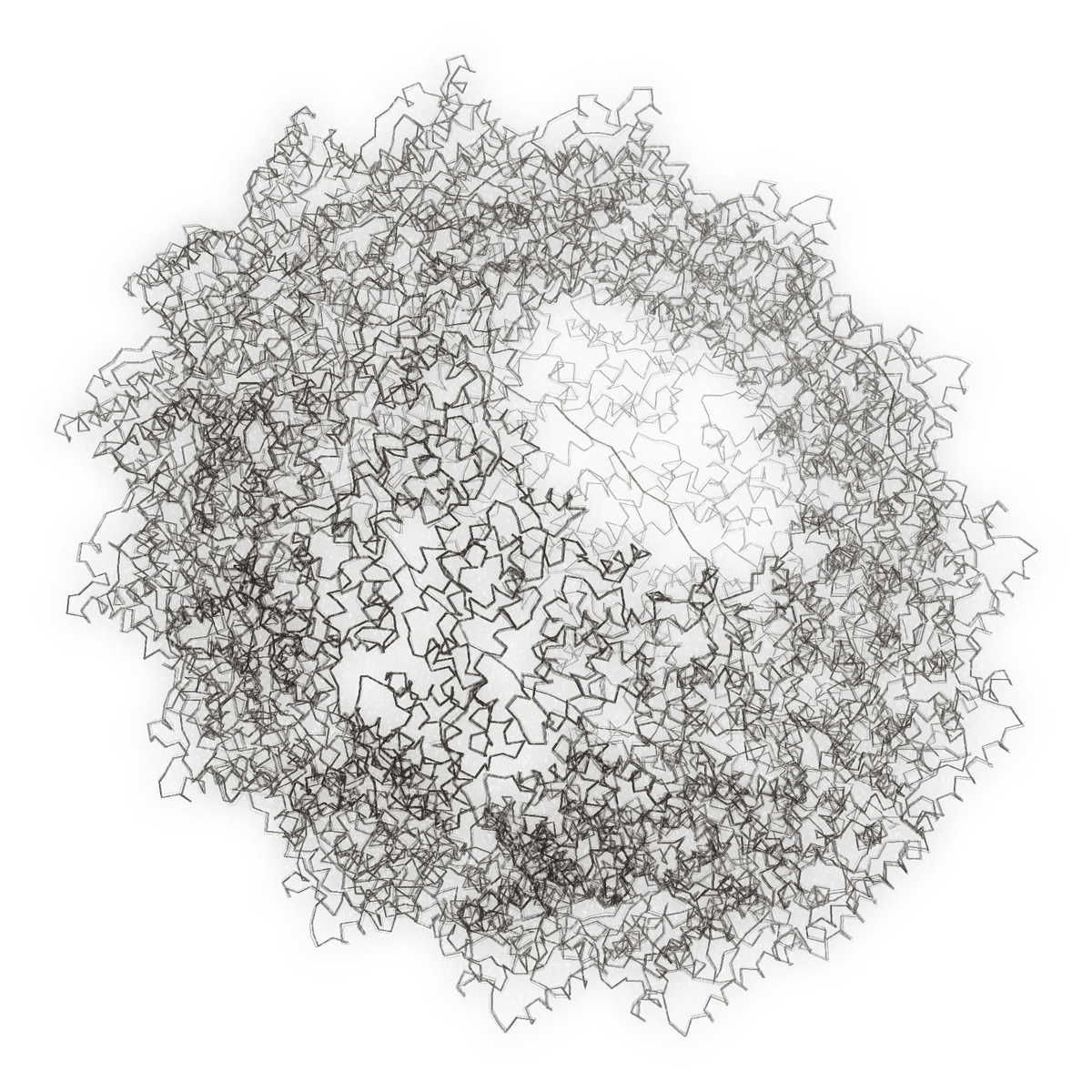
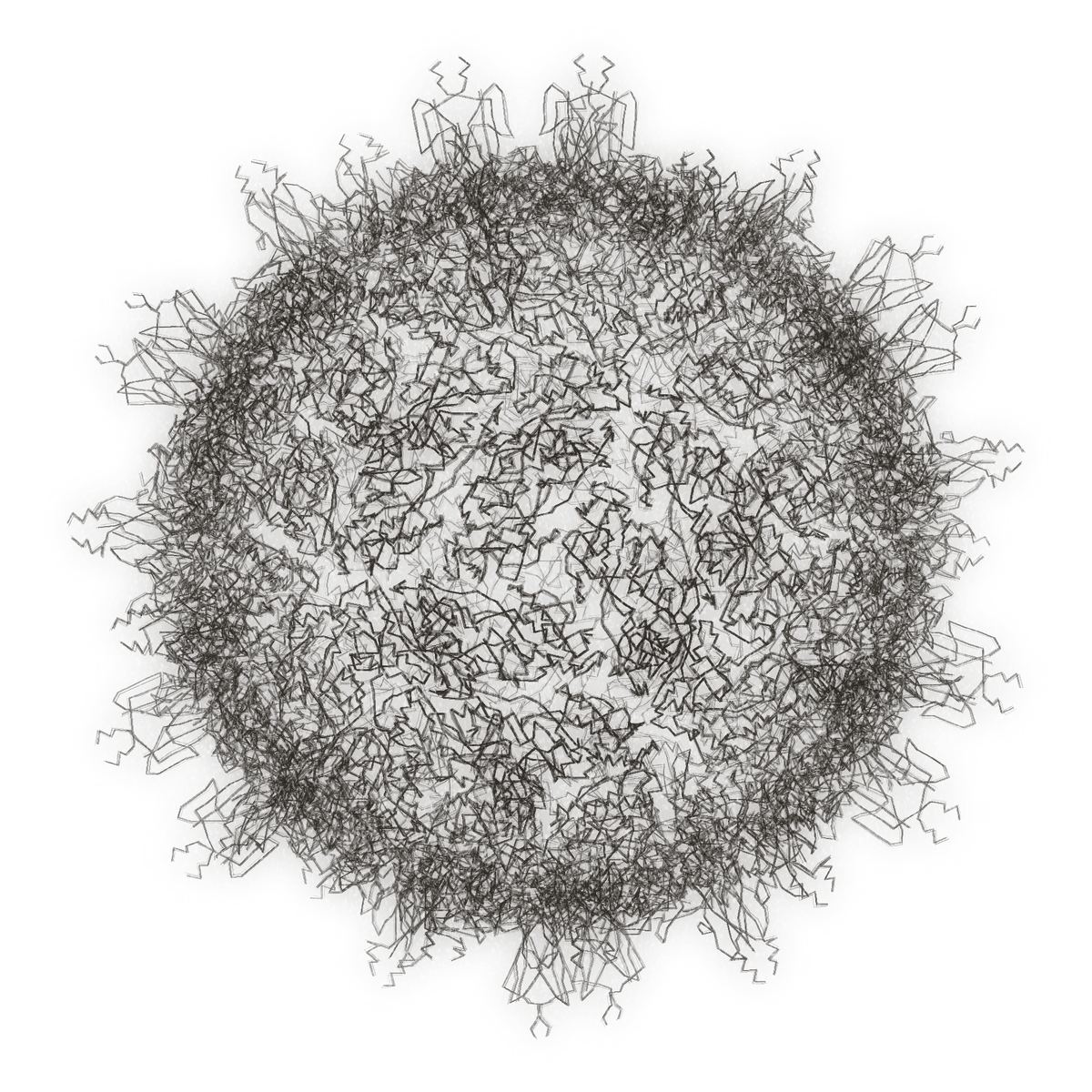
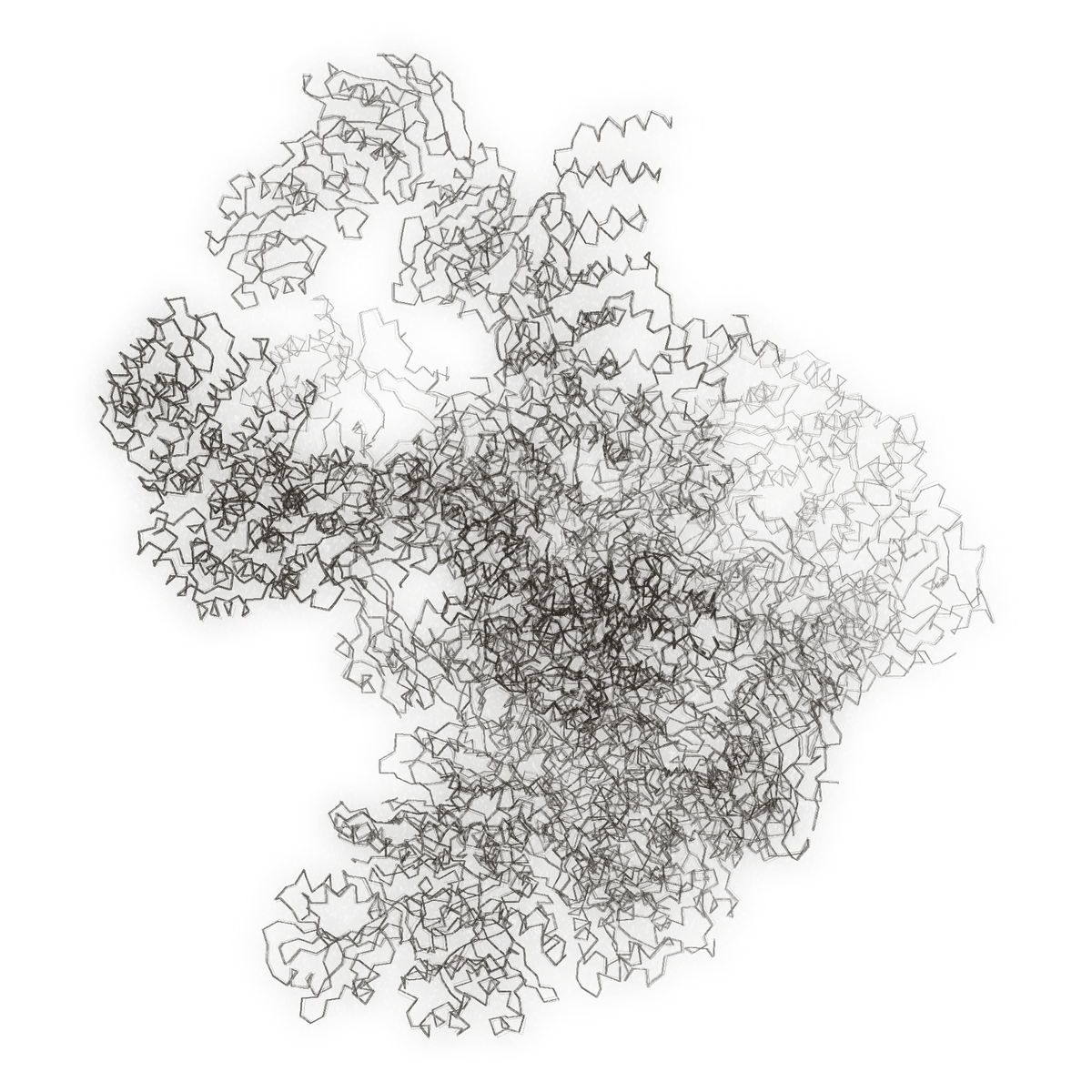
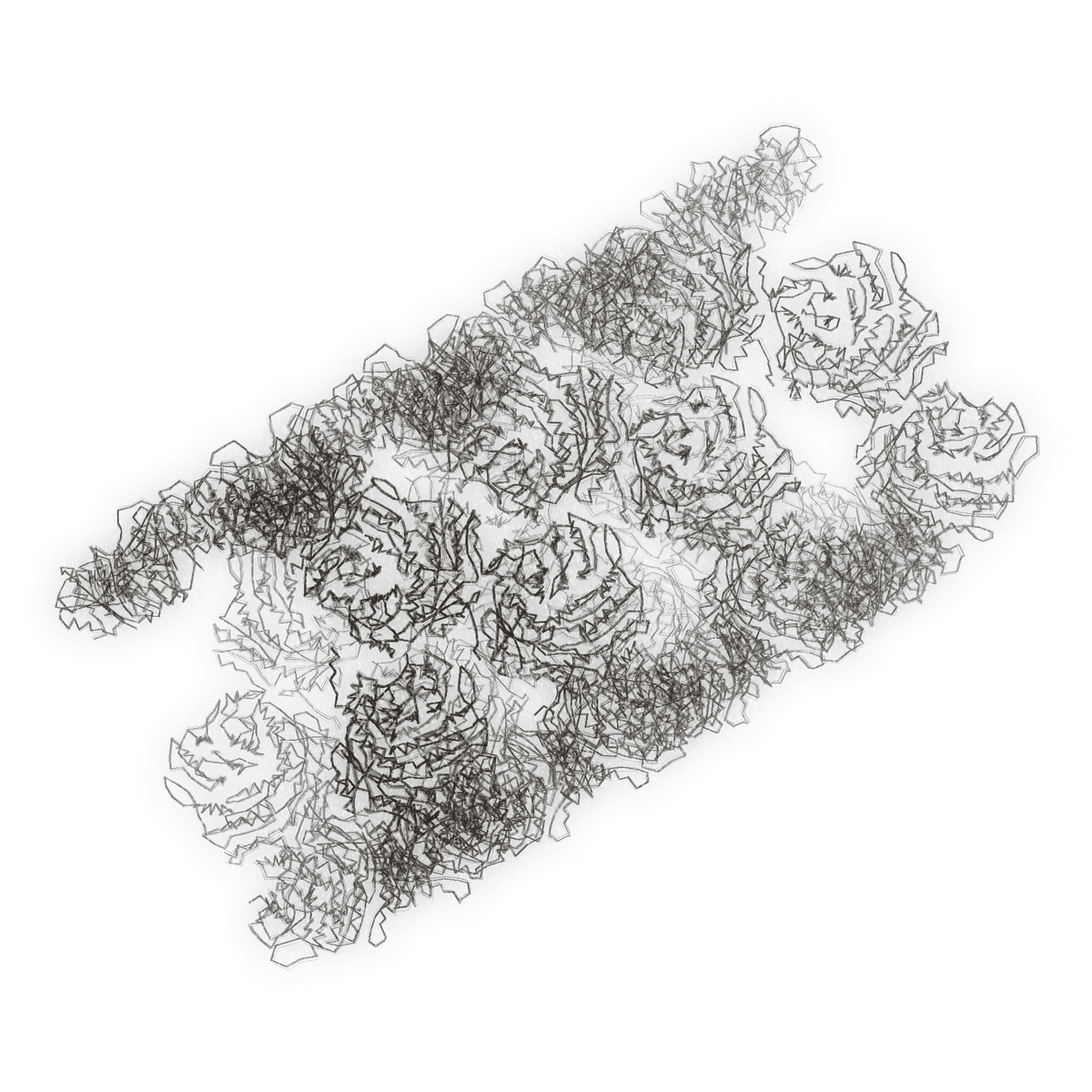
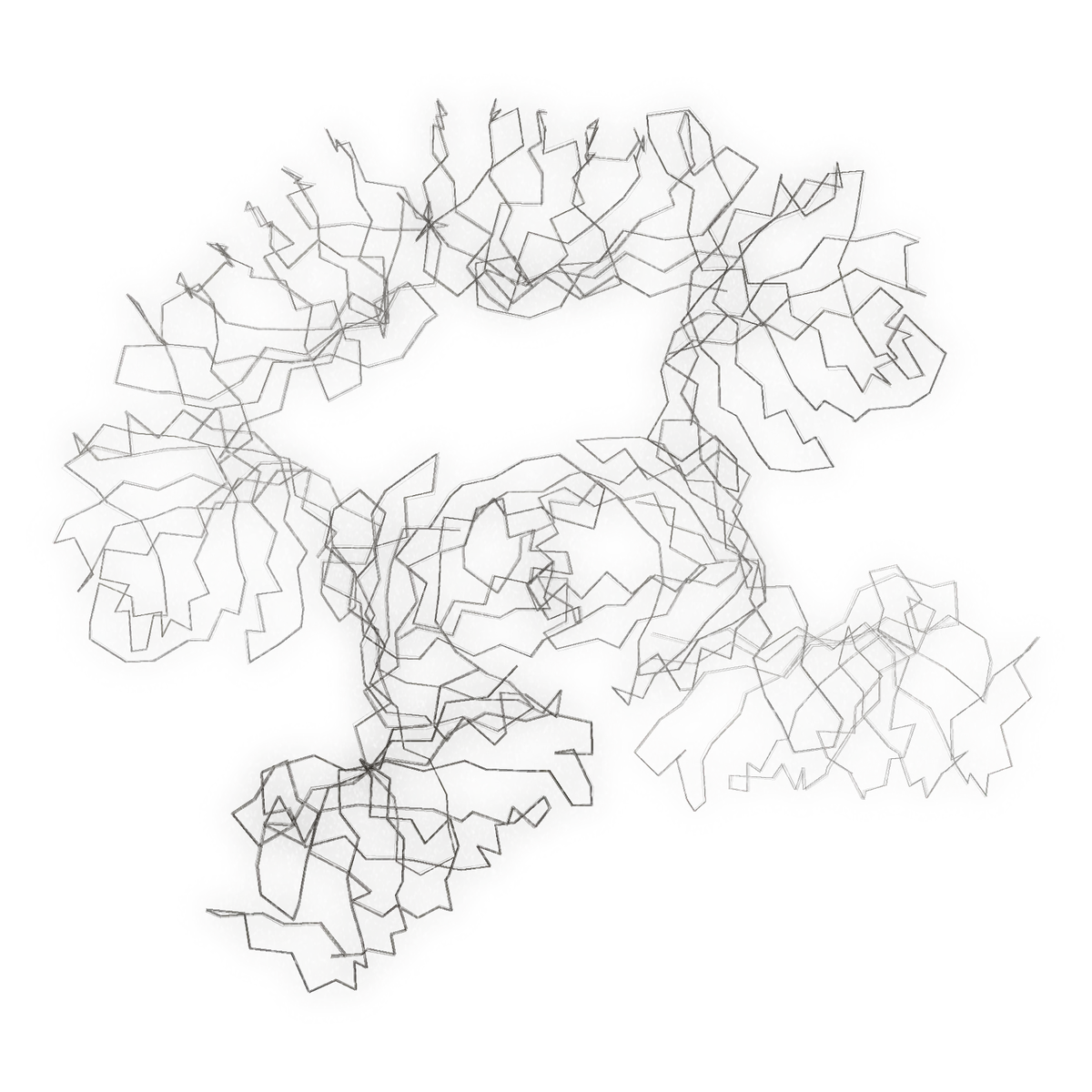
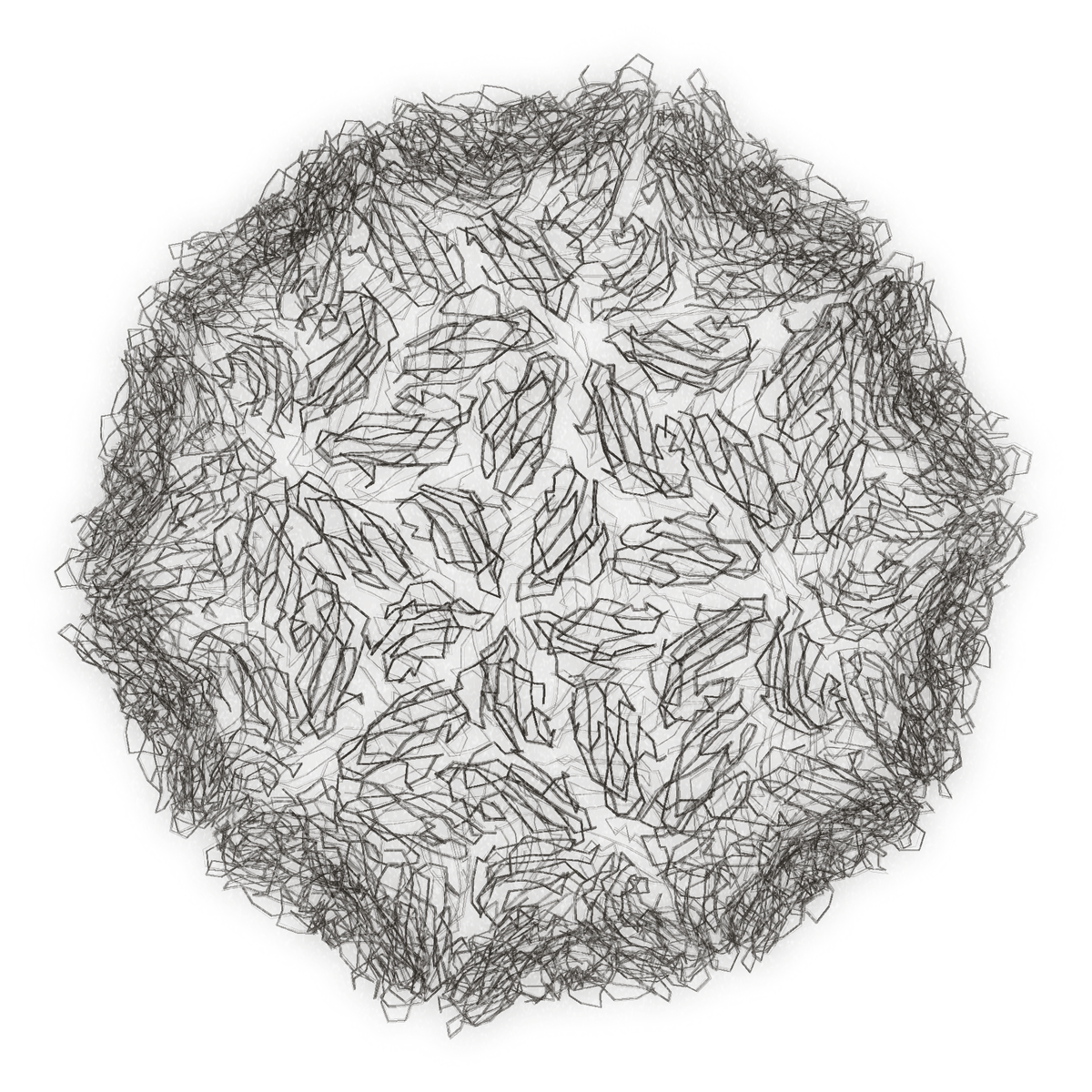
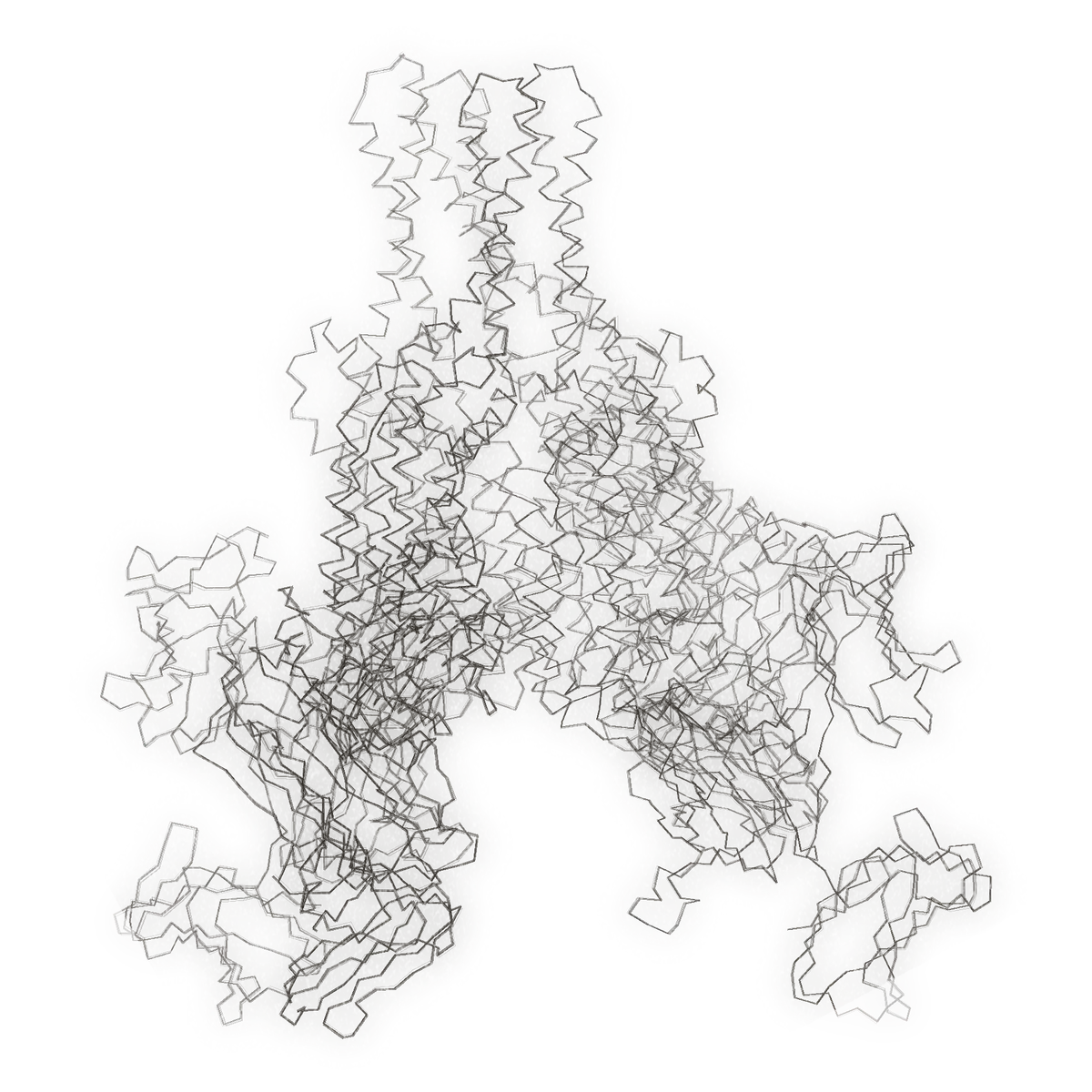
Twenty-one cryo-EM and X-ray structures from the founder's papers, each drawn as an ink plate from the coordinates deposited with the paper. Strokes nearer to you are heavier; one subunit is in red.
Lumazine synthase cage
PDB 9G3PCRYO-EM · 2.08 Å · ACS NANO 2025
Plastid-encoded RNA polymerase
PDB 8R6SCRYO-EM · 2.49 Å · CELL 2024
Barley yellow dwarf virus VLP
PDB 6SCLCRYO-EM · 3.0 Å · STRUCTURE 2019
Sweet potato feathery mottle virus
PDB 8ACBCRYO-EM · 2.6 Å · COMMUN BIOL 2023
Nek7 kinase with compound 51
PDB 6S75X-RAY · 3.3 Å · BIOCHEM J 2020
AbyU, a natural Diels–Alderase
PDB 5DYVX-RAY · 2.5 Å · JACS 2016
Lumazine synthase nanotube
PDB 9G3MCRYO-EM · 3.09 Å · ACS NANO 2025
Hendra virus nucleocapsid
PDB 8C4HCRYO-EM · 3.49 Å · SCI REP 2024
Pepper cryptic virus 1 VLP
PDB 7NCRCRYO-EM · 2.9 Å · COMMUN BIOL 2021
Vip3Bc1 insecticidal toxin
PDB 6YRFCRYO-EM · 3.9 Å · NAT COMMUN 2021
Alternanthera mosaic virus VLP
PDB 7OG6CRYO-EM · 3.3 Å · VIRUSES 2021
PksI enoyl-CoA isomerase
PDB 4Q1KX-RAY · 1.75 Å · SCI REP 2020
Lumazine synthase 36-pentamer cage
PDB 9G3NCRYO-EM · 3.07 Å · ACS NANO 2025
PEP transcription elongation complex
PDB 8RASCRYO-EM · 2.62 Å · CELL 2024
Potato leafroll virus VLP
PDB 6SCOCRYO-EM · 3.3 Å · STRUCTURE 2019
Sweet potato mild mottle virus
PDB 8ACCCRYO-EM · 2.9 Å · COMMUN BIOL 2023
Nek2 kinase with compound 51
PDB 6SK9X-RAY · 2.0 Å · BIOCHEM J 2020
Cowpea mosaic virus with an Affimer
PDB 6QOZCRYO-EM · 3.4 Å · SCI REP 2019
CryomaskR
WYSIWYG cryo-EM mask generation · Available · macOS · Linux · Windows
Desktop tools for cryo-EM and structural biology, built by a working structural biologist. Free for academic research; commercial licences available.
CryomaskR · key features
- Real-time masks, instant feedback
- macOS and Linux
- Standard cryo-EM file formats
- No programming needed
- Complex structures & membrane proteins
- Exports for popular packages
Need a tool for your lab? Tell us what you need →
In development · structural biology studio
From map
to cover,
in one window.
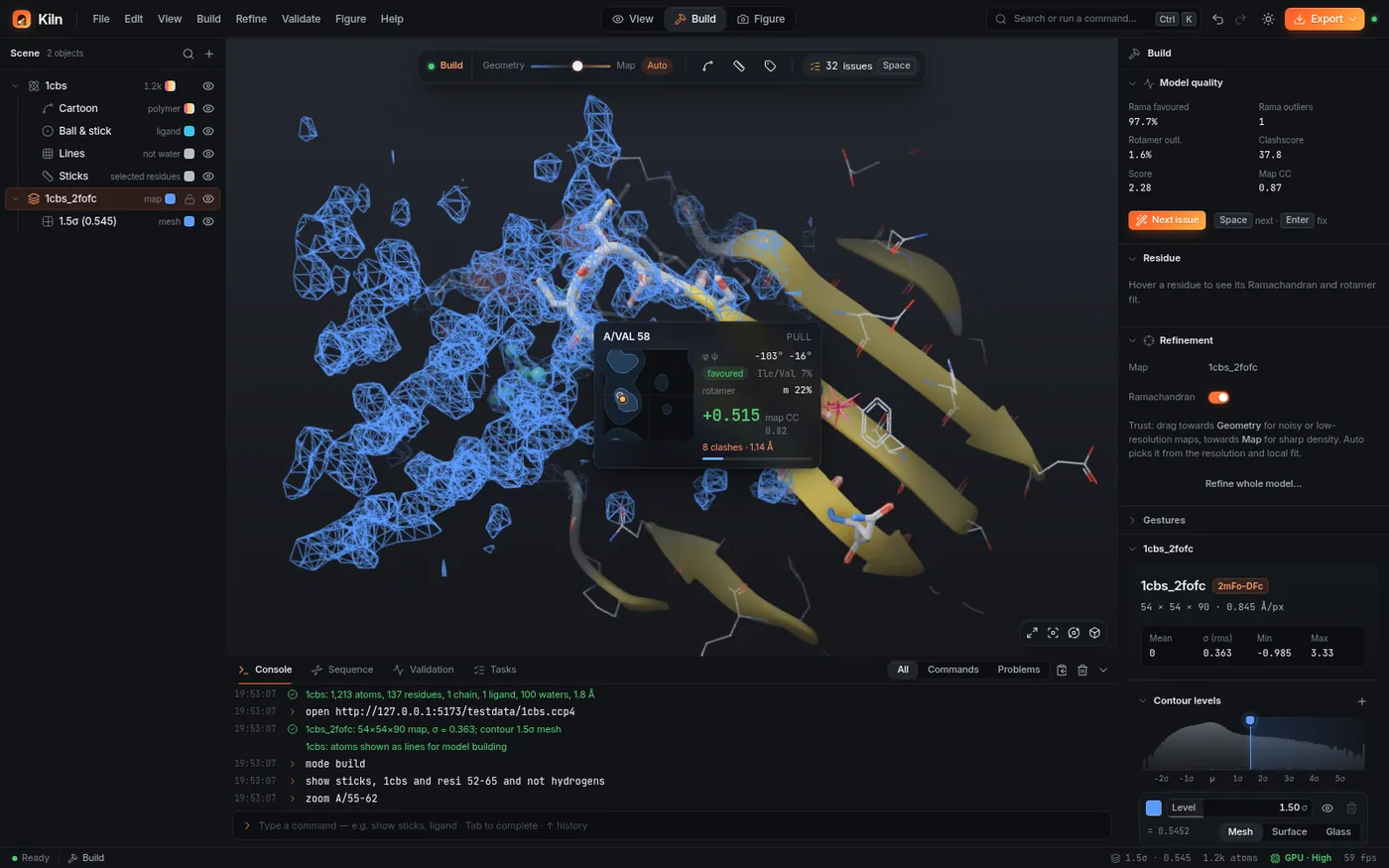
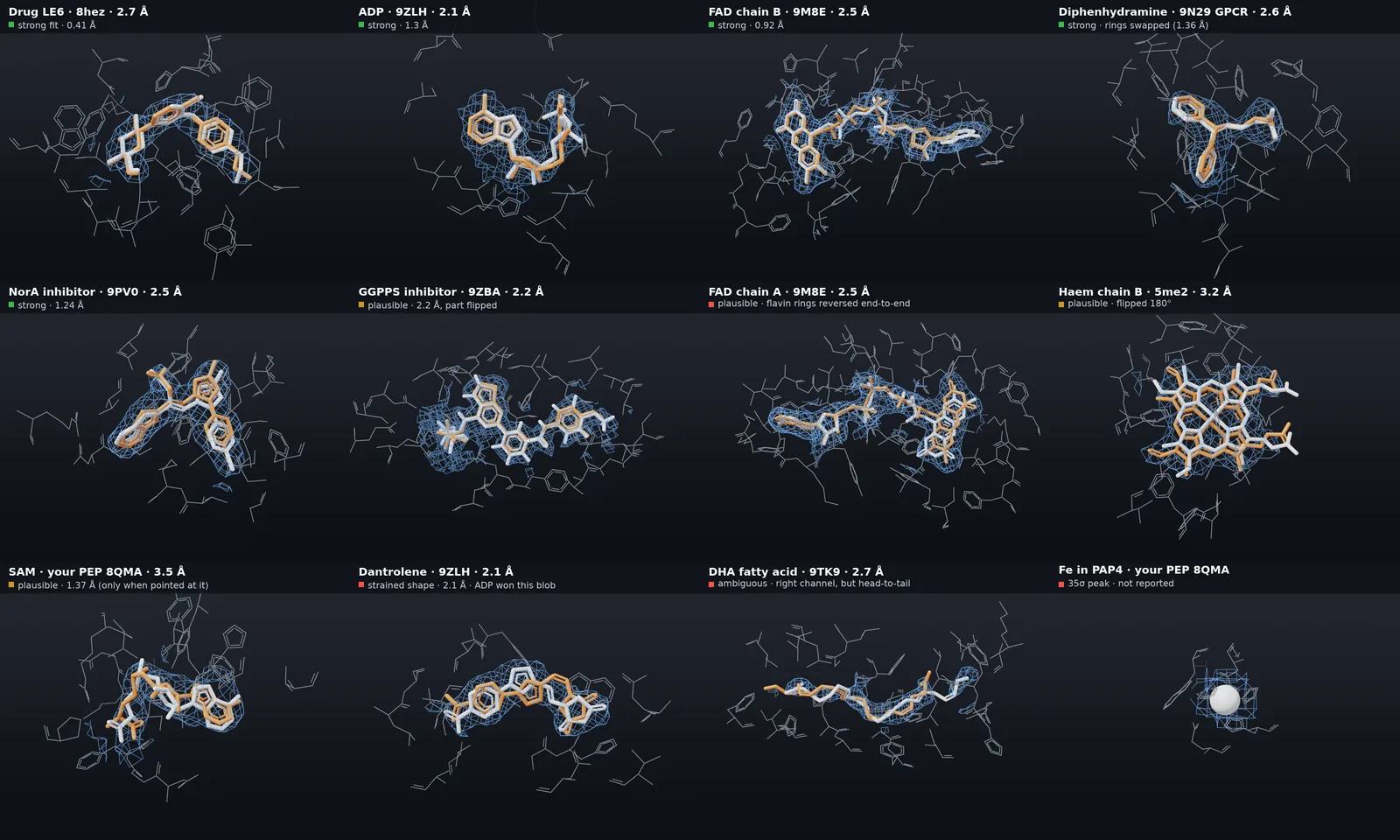
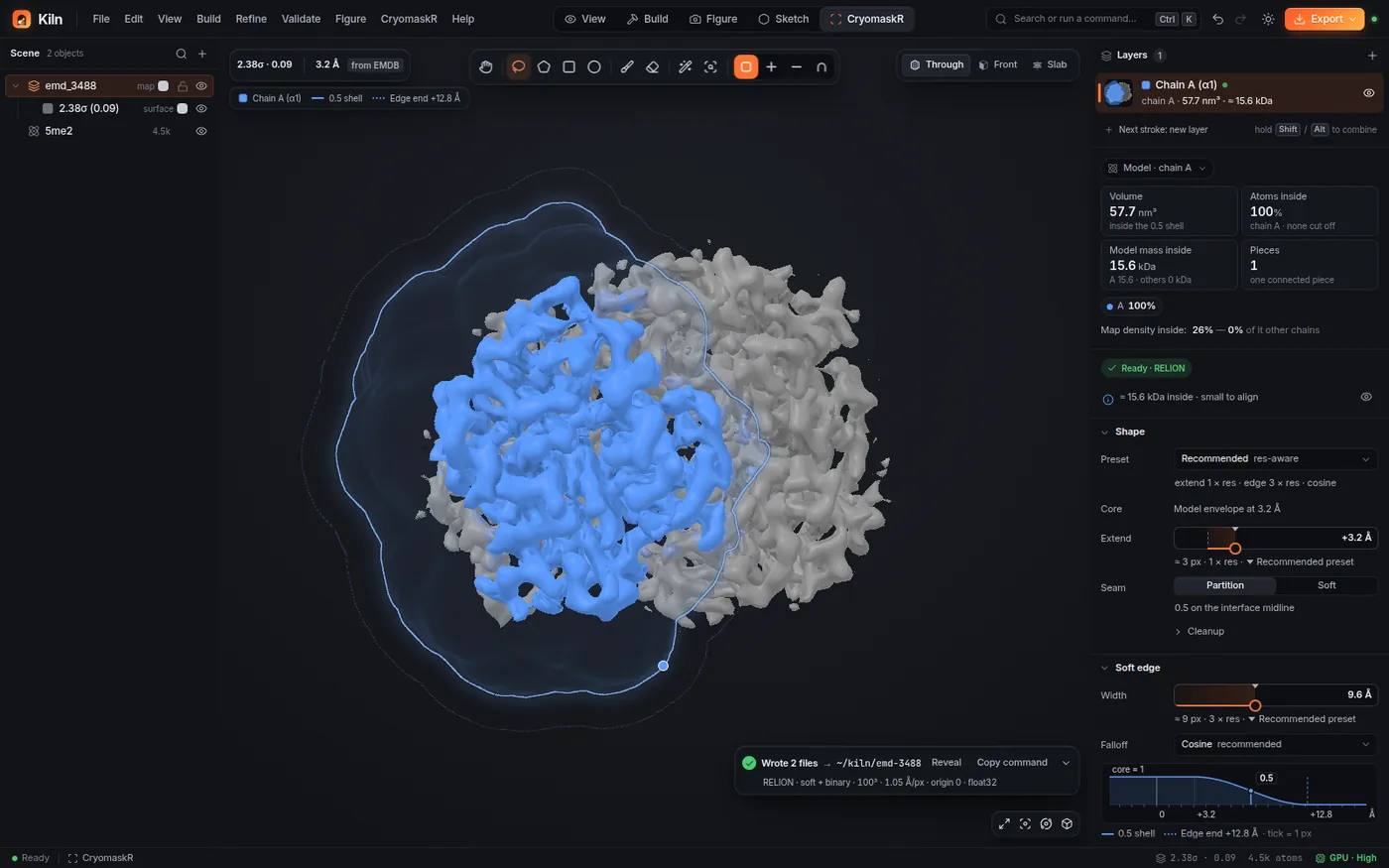
Kiln is one application for the whole job: look at a structure, build and refine it into cryo-EM or X-ray density, validate it, then make the figure and the film.
Kiln is command-first: what you click is a line of its command language, so the same work runs as a script, headless on a cluster, or from a request in plain words.
Looks · glaze test tiles
Eleven looks.
One command.
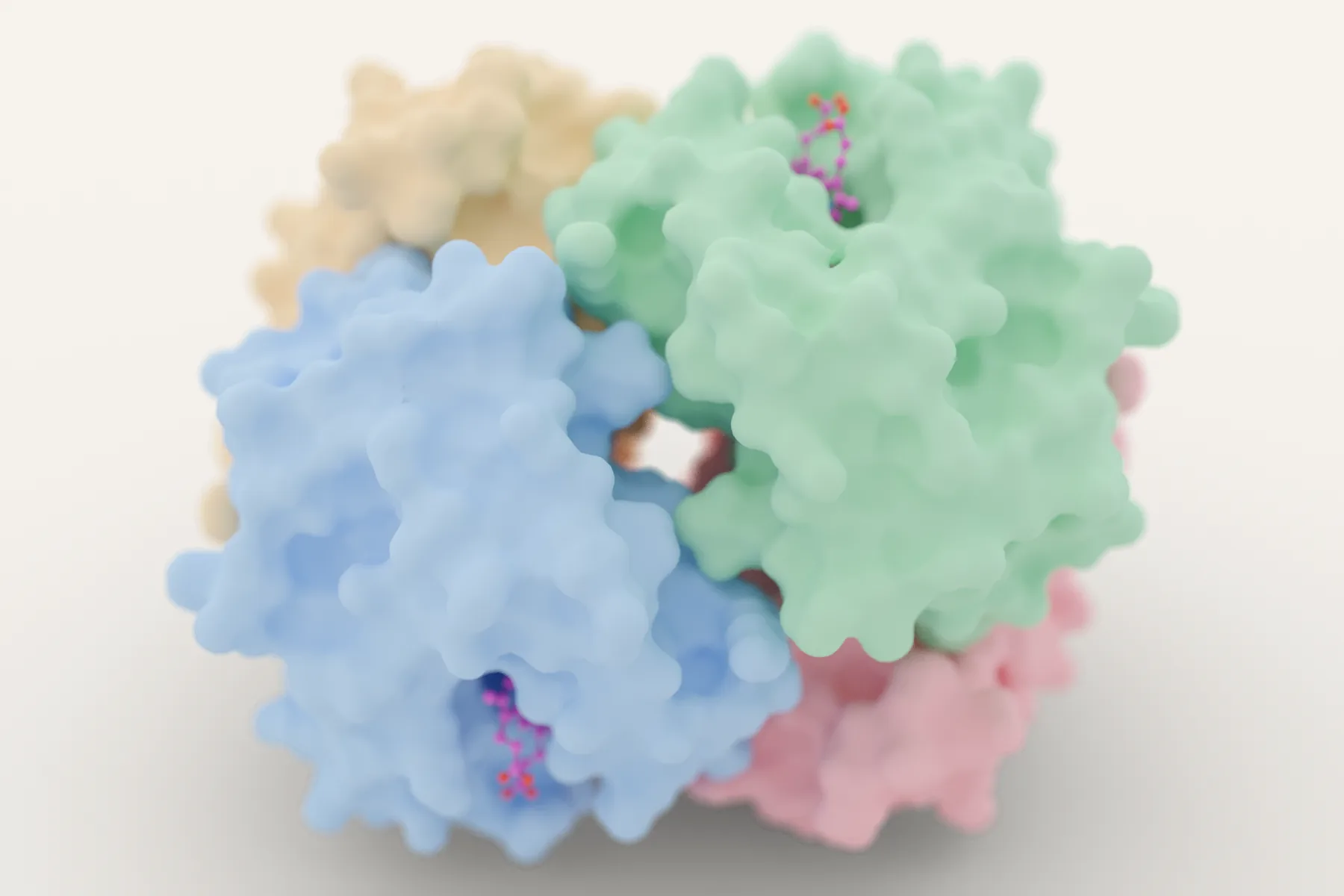
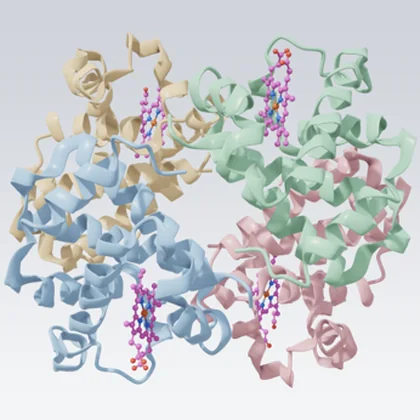
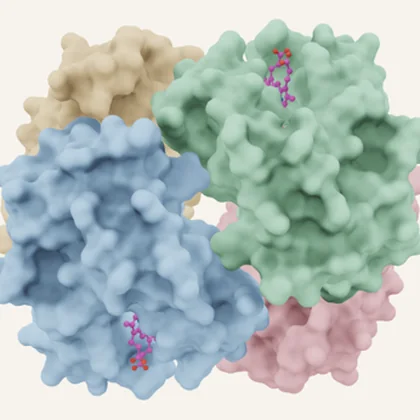
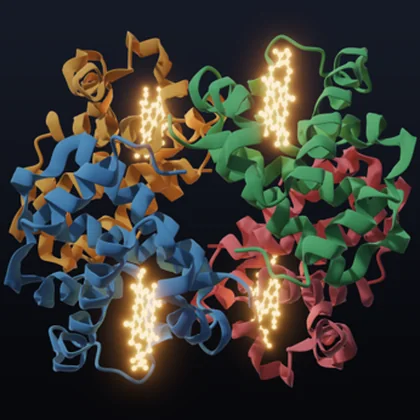
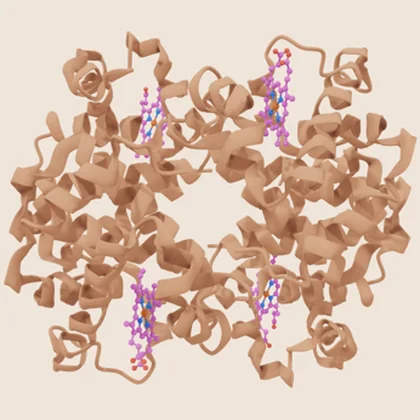
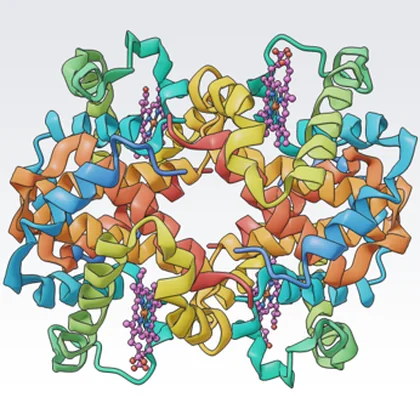
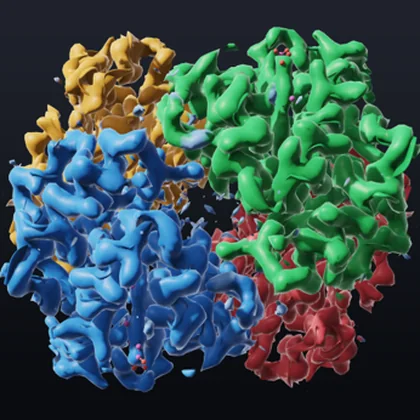
A look restyles the whole scene in one undo step: representation, colour, material and light. Each is named after a glaze or a clay body, and each is a short script you can read, change and save as your own.
Consoleone undo step
look porcelain
tune softness=0.7, glow=0.4
look save lab-house-style
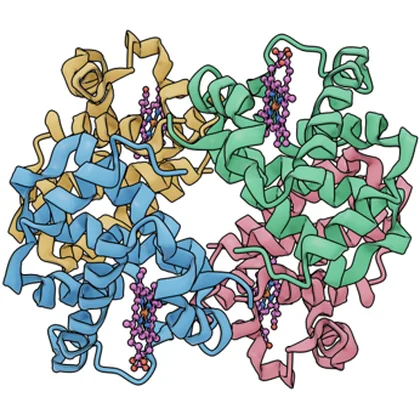
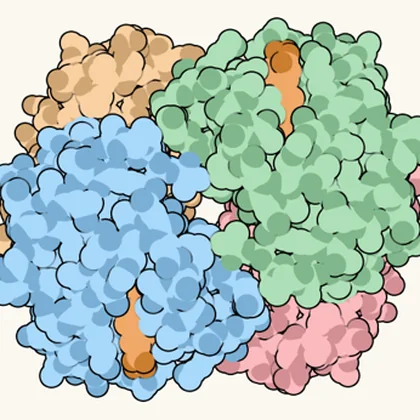
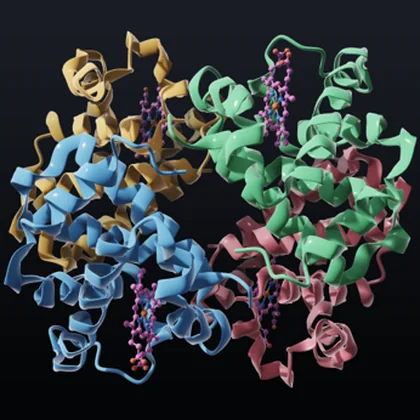
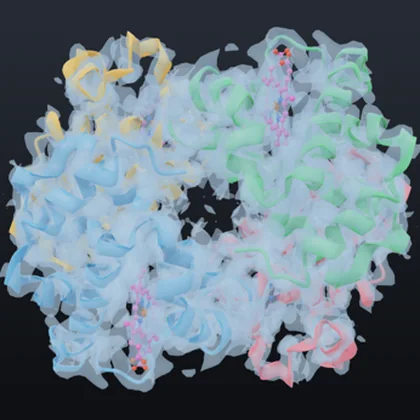
house style
What's in the kiln
Build, refine, check, show.
Automated model building · live build
Watch the model
fire into the map.
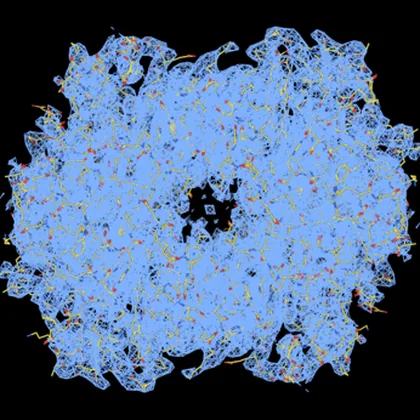
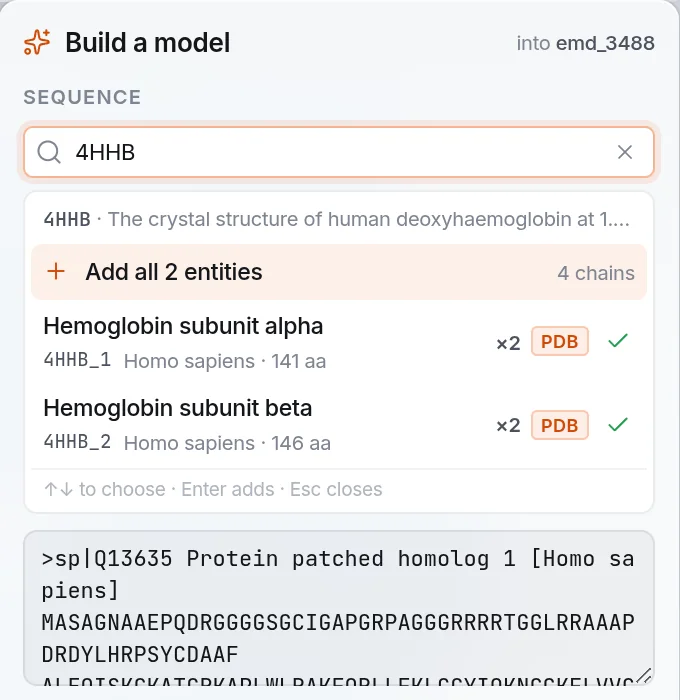
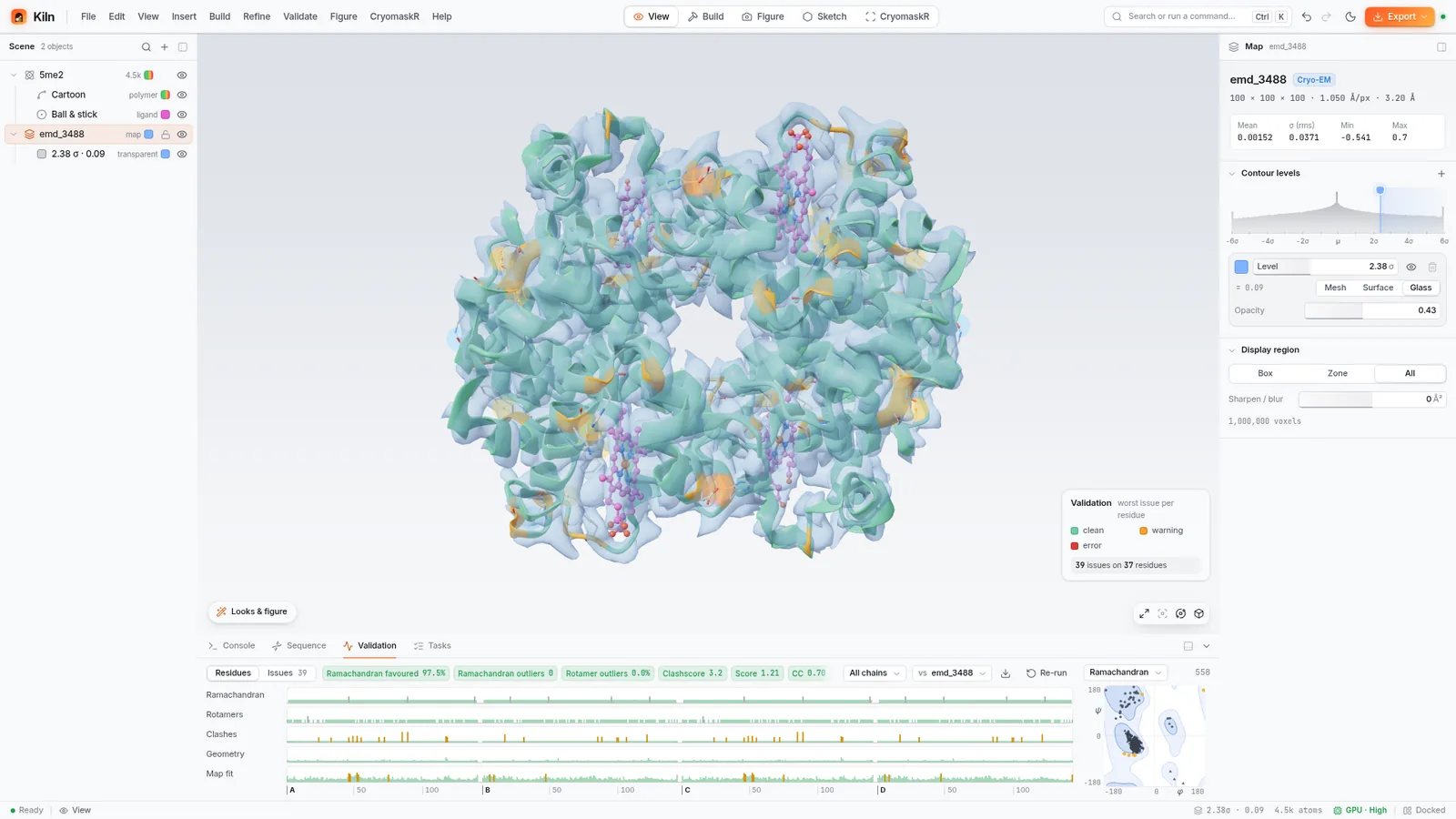
Give Kiln a cryo-EM map and, if you have it, the sequence. It reads the density, finds the Cα positions, joins them into chains, places the backbone, assigns the sequence, builds the side chains and refines. You watch every step happen in Build mode. Nothing is a canned animation: each frame is the pipeline's real state, and the draft ends with the spots it wants you to check.
ConsoleGPU or CPU
fetch emd-3488
autobuild emd_3488, fasta=hb.fasta, device=gpu
autobuild_accept
or on a cluster: kiln autobuild
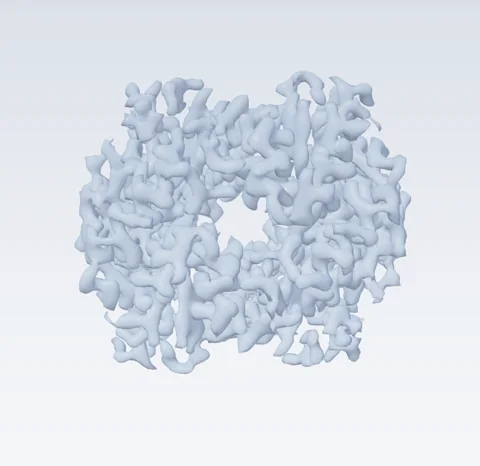 01 Reading the density
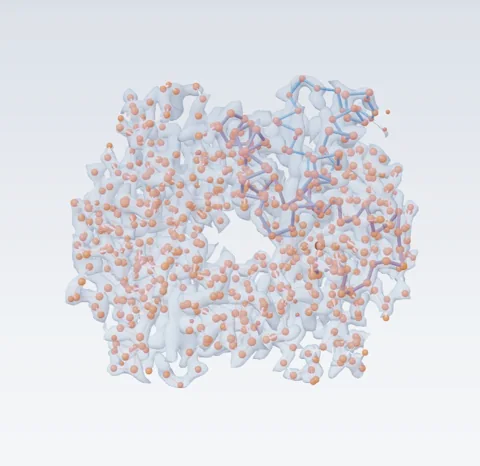 02 Finding Cα, joining chains
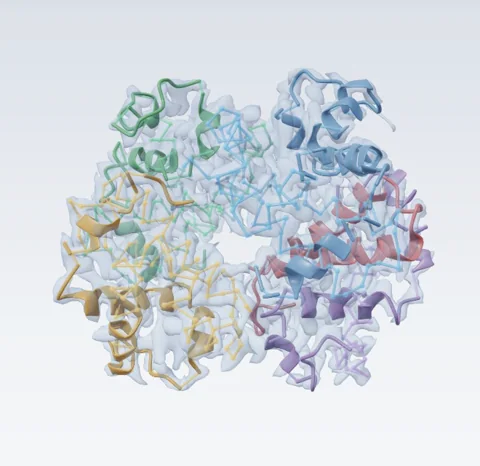 03 Placing the backbone
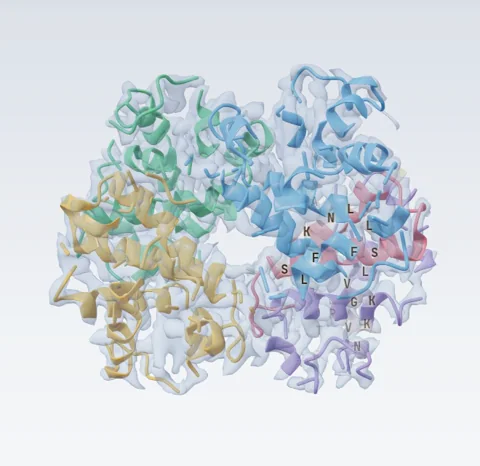 04 Assigning sequence
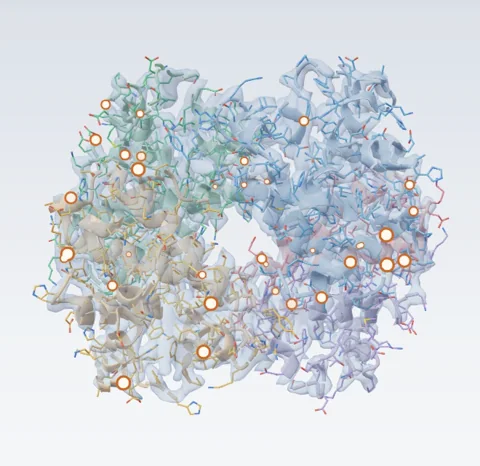 05 Side chains, refining
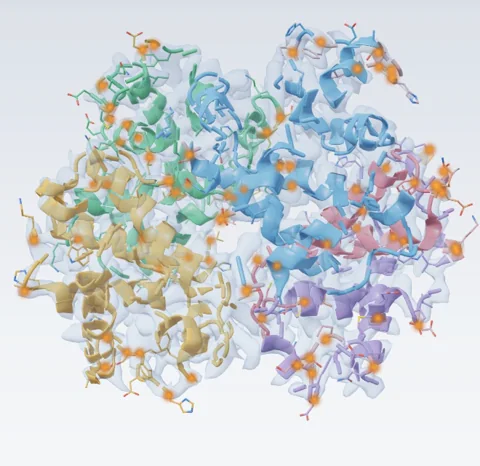 06 Draft built, spots to check
Movie Studio
Story, look,
format. Film.
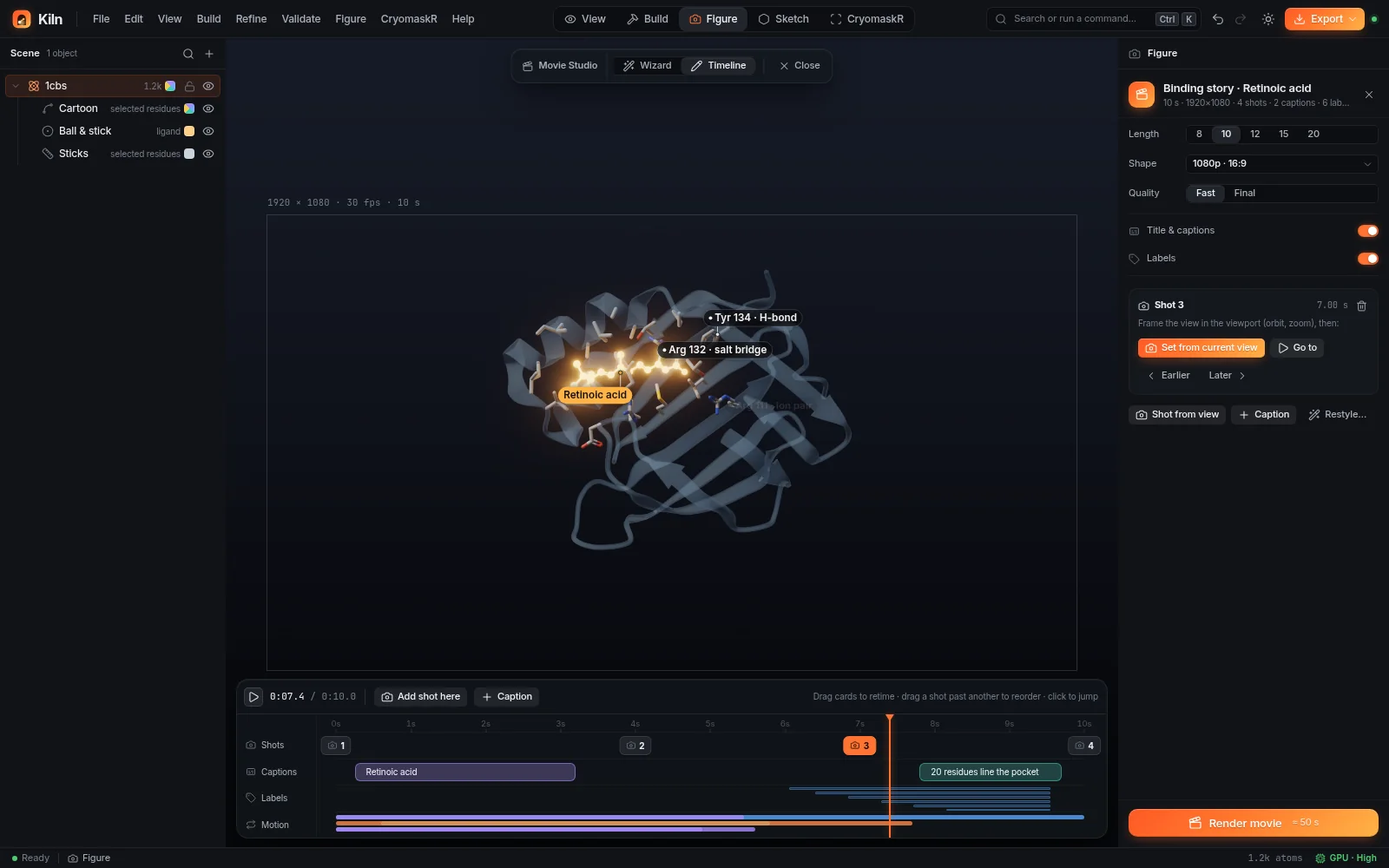
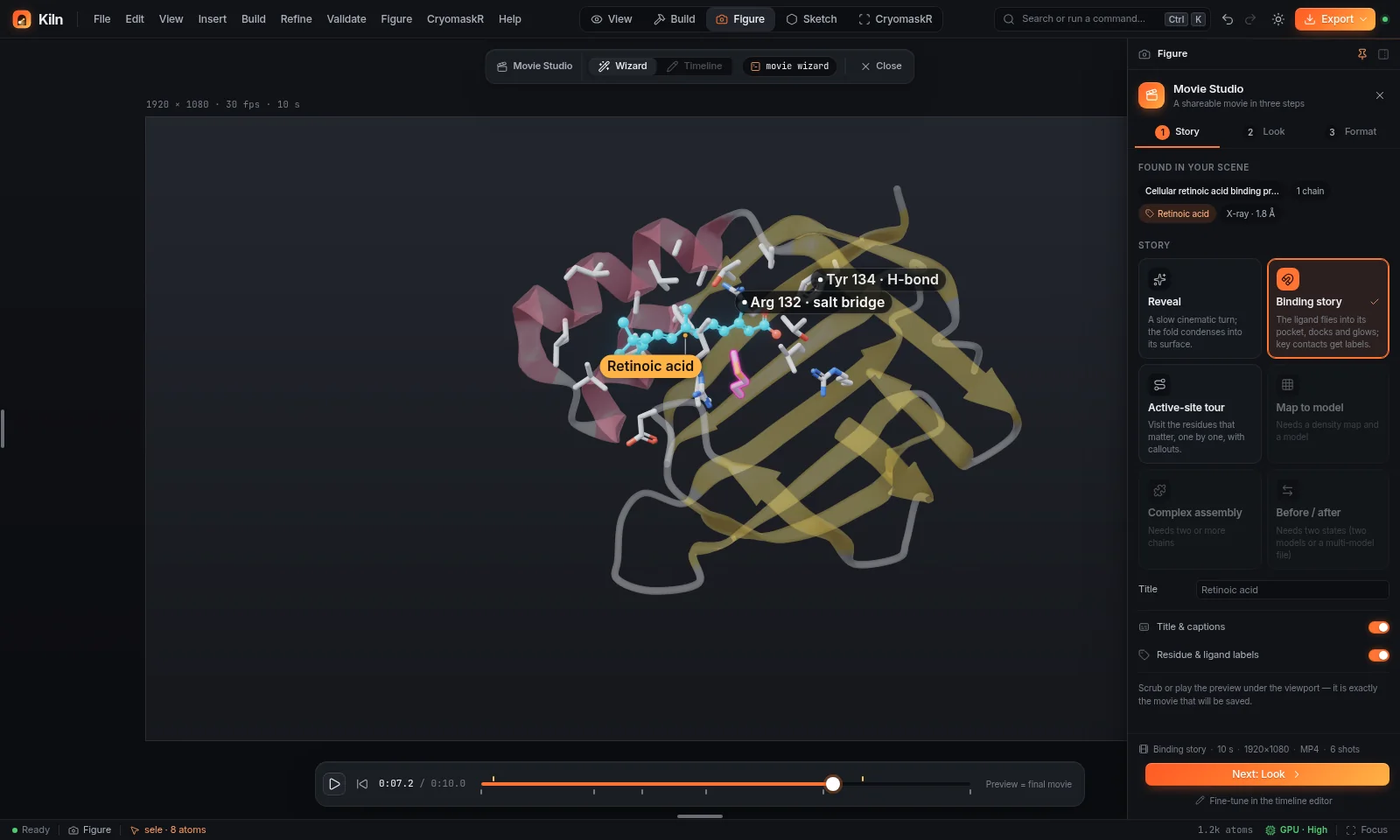
Pick a story — reveal, binding story, active-site tour, map to model, complex assembly, before and after — then a look and a format. Kiln reads the scene, writes the shots, and hands you a timeline of shots, captions, labels and motion to fine-tune.
Consolethe wizard, as text
movie template=binding, ligand=REA, duration=10, format=1080p, title="Vitamin A, docked"
movie caption edit binding-title-1b, text="Vitamin A finds its pocket"
look celadon
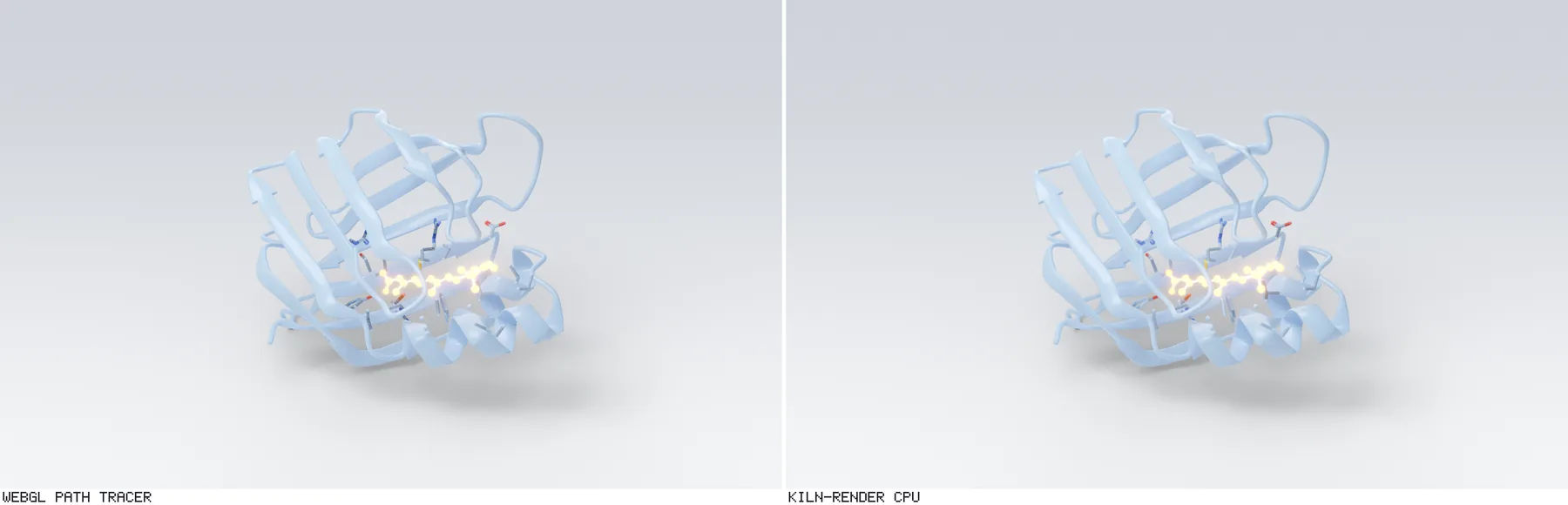
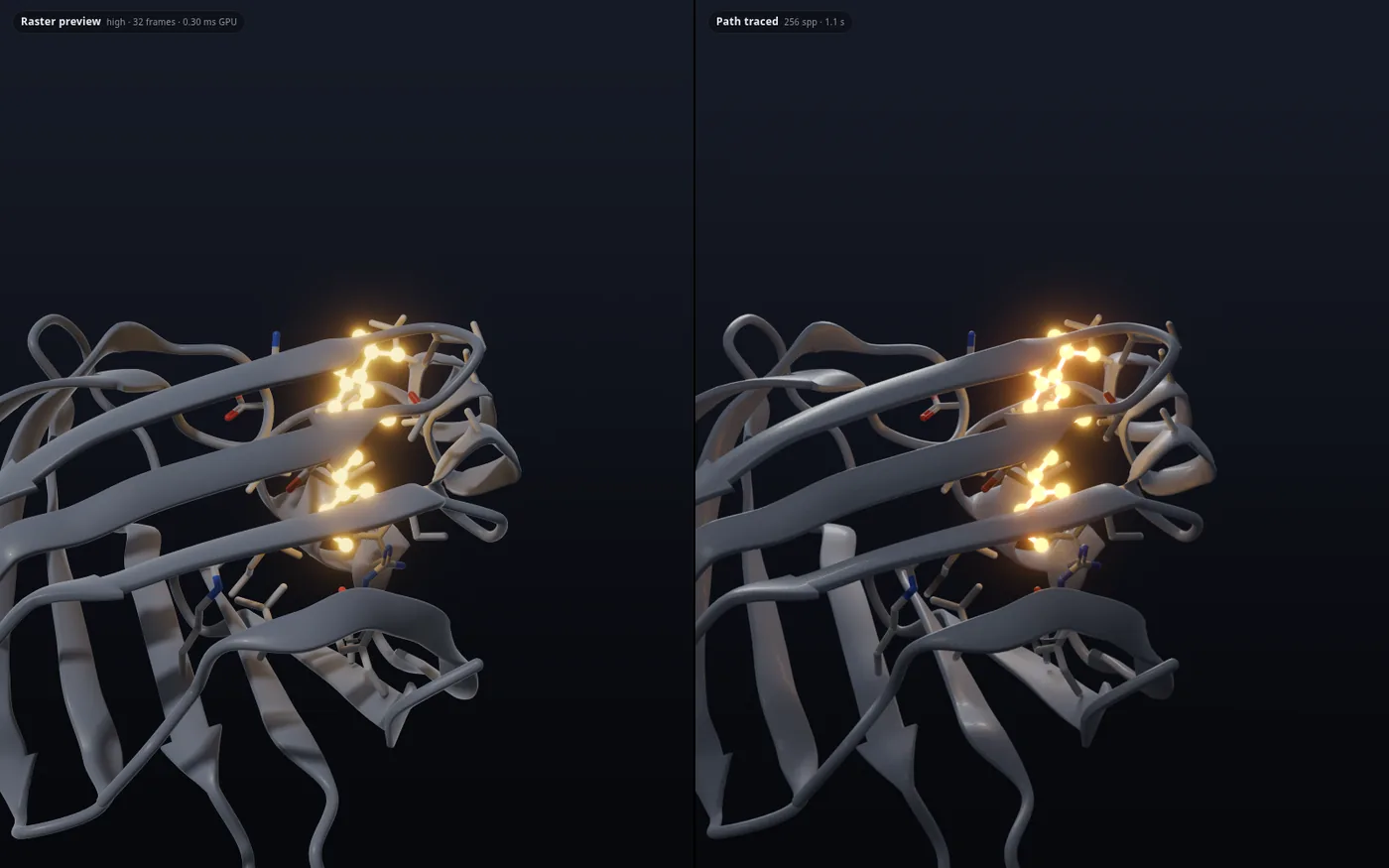
movie export docked.mp4, engine=pathtrace
Scene prefabs
Set the scene.
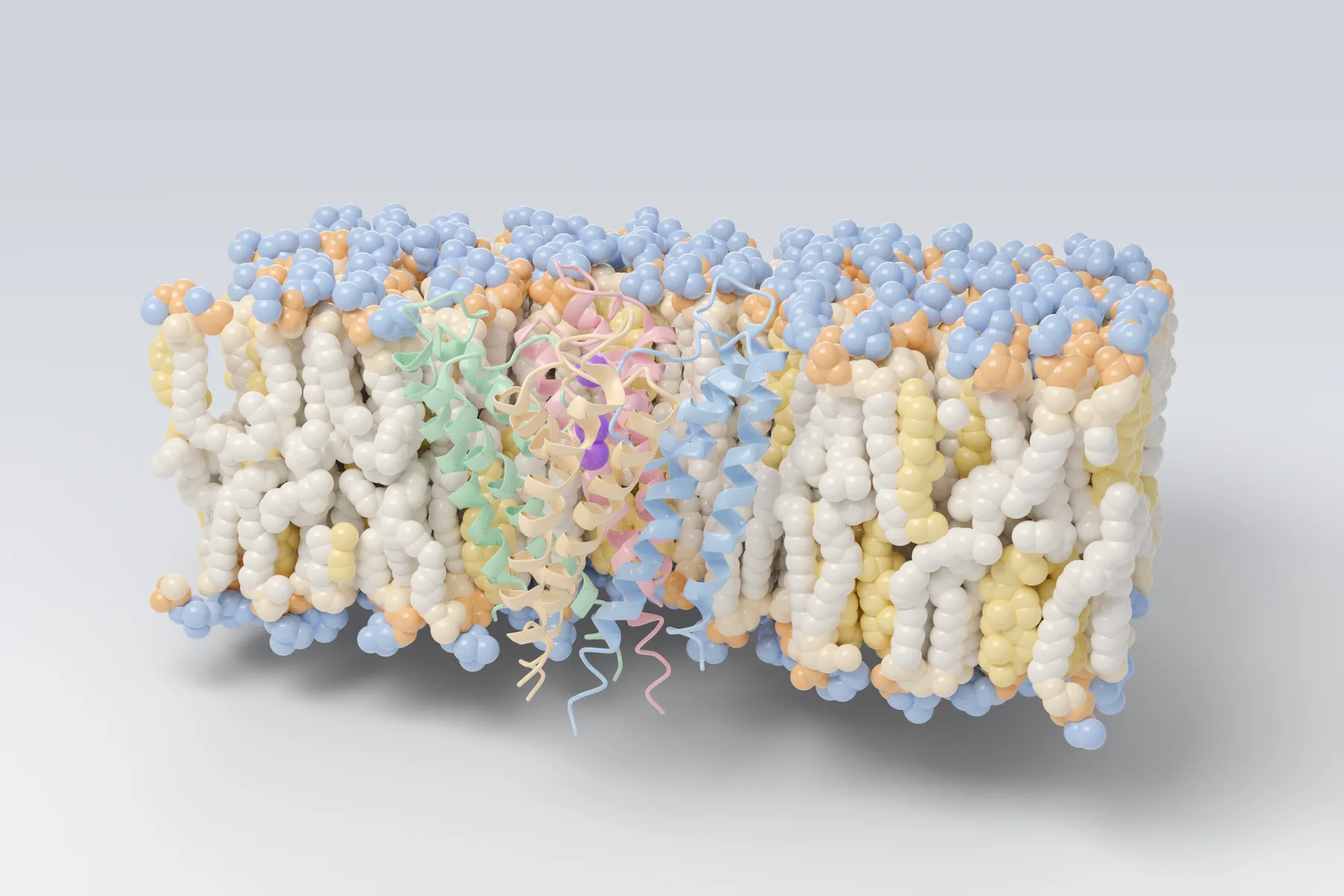
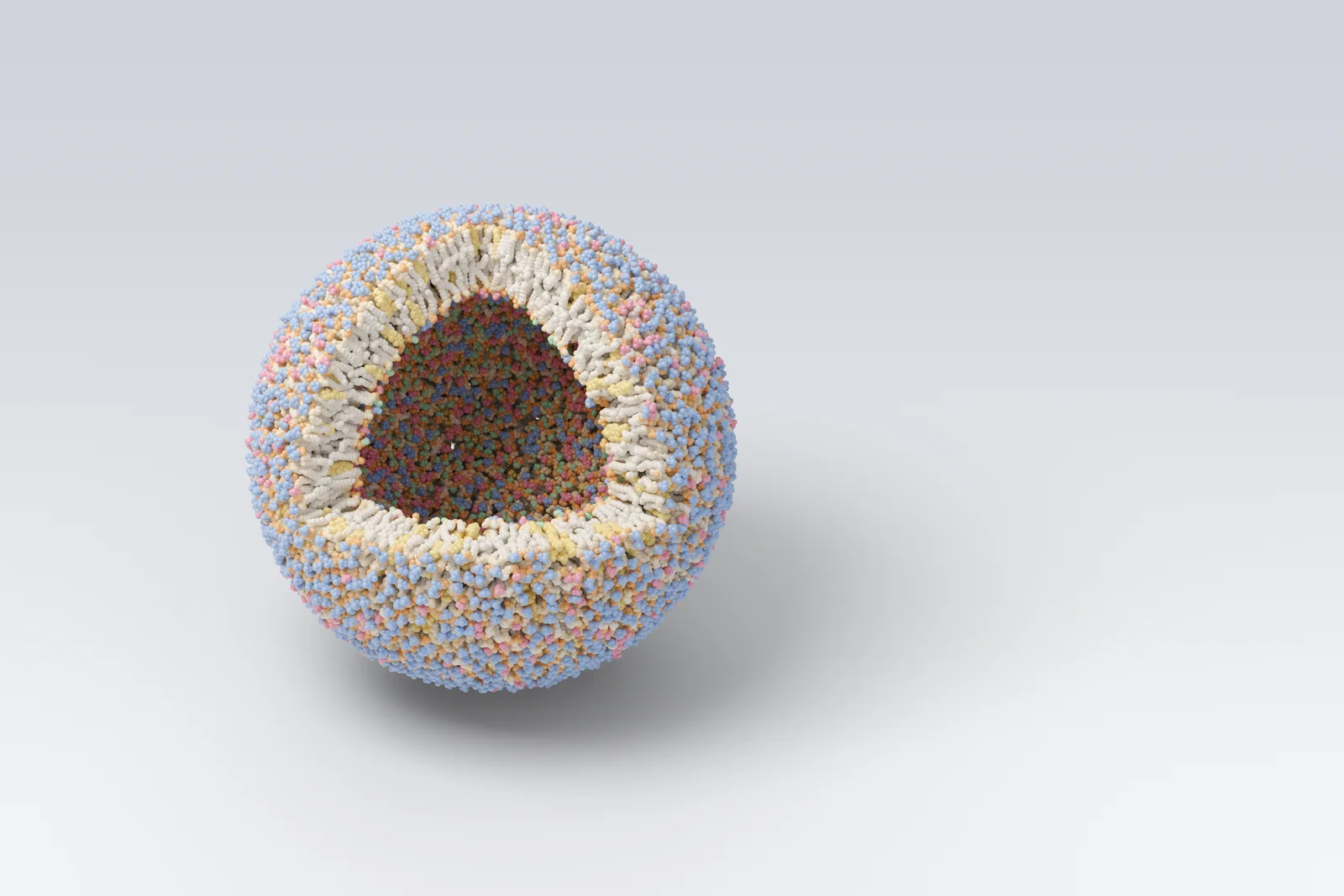
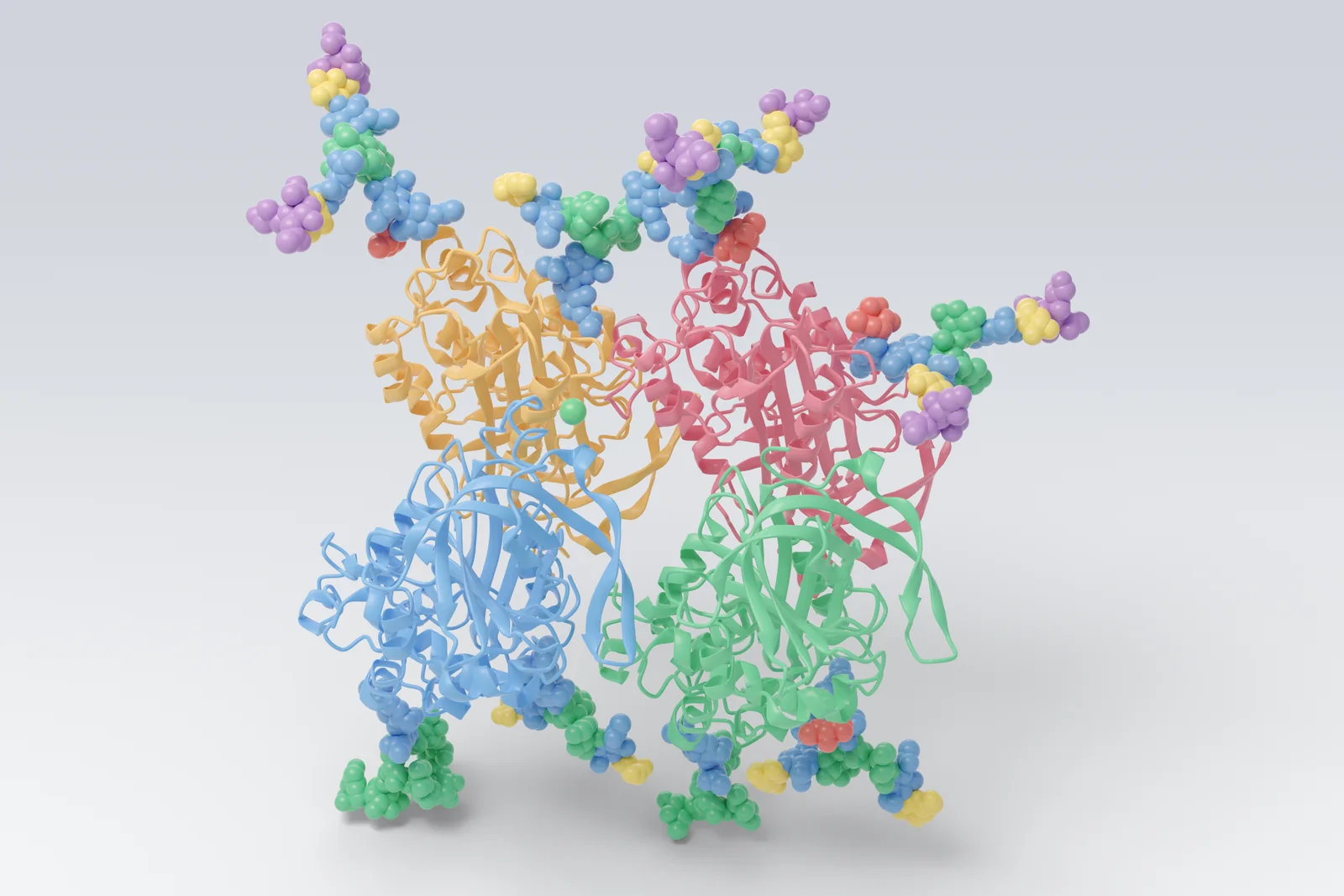
Drop in a membrane, a vesicle, a nanodisc, a micelle or glycans. Kiln finds how a membrane protein sits in the bilayer, embeds it, and carves the lipids around it.
Consoleone line
fetch 1bl8
prefab add membrane, lipids=POPC:70+CHL1:30, size=200, embed=1bl8
look glaze
Kiln console · or a script, or the CLIsame language
fetch emd-3488
autobuild
validate
find_ligands
look ember
glow ligand, color=orange
render cover.png, width=3000, height=2000, engine=pathtrace
or headless: kiln run figure.kiln on the cluster
Or ask in plain words. Over MCP, an assistant such as Claude or Codex drives Kiln through the same commands, and you watch each step land in the window: “make the ligand glow and render me a cover.”
Also in the kiln17–22
- 17X-ray refinement in reciprocal space, with live maps while you build
- 18Fit to map: global search for where a model sits in the density
- 19Assemblies: capsids and filaments built from the deposited symmetry
- 20Trajectories and cryo-ET particle mapbacks
- 21Deposition: mmCIF out, with a validation report
- 22Runs anywhere: desktop, browser, or headless on HPC with
kiln serve
From the microscope column down to one molecule
Four sheets · one zoom
From the column to one molecule.
A grid three millimetres across, a square of holey carbon, one hole of glass-like ice, one particle. Then the model built from hundreds of thousands of them.
Where computation
meets the bench.
Machine learning is changing how structures are solved, how drugs are found, and how the science is taught. That is the thread through everything here: models that predict, experiments that check them, and explanations that make both understandable.
On the bench and in industry
- Cryo-EM staff scientist · eBIC, Diamond
- Senior Scientist · Exscientia, 2023–25
- Computational antibody design · mAbs 2025
- CryomaskR · masks you can see
- Explainers drawn entirely in code
What does a predicted structure still need from experiment? Usually: the ligand, the conformation, the complex.
Teaching sheet · try it
Understanding first.
The contrast transfer function decides what a cryo-EM image can show. Move the defocus and watch the zeros move and the Thon rings tighten. Computed live at 300 kV.
then the black box
Overtwo
Systems first.Then feel.Then polish.
Overtwo is our games label. We make games the way we make software — mechanics proven before content, every system tested by real input.
Visit Overtwo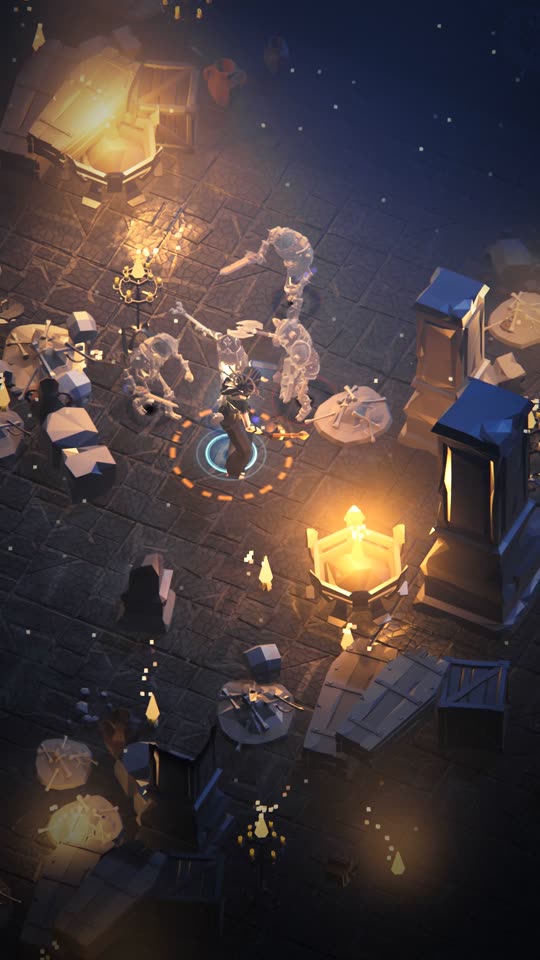
Coming soon · iPhone
Bring a Sword
Premium dark fantasy action RPG for iPhone. Pick a class, head down, come back with your pockets full. No ads, no in-app purchases.

In development · PC
Disorganized Crime
Open-city crime sandbox. You are the criminal — steal anything with wheels and watch the district turn against you.

Dr Matthew
Calthorpe‑Byrne
Founder & Director · Structural biologist
Matthew founded mcalbyrne Ltd in 2025. He is a structural biologist who has spent more than a decade solving protein structures by cryo-EM and X-ray crystallography, and is currently a Postdoctoral Research Associate in the Siebold Group at the Division of Structural Biology (STRUBI), University of Oxford. CryomaskR came out of that work; Overtwo is where he builds games.
Career sheet, plates & publicationsStations
- PhD · Bristol
- Postdoc · Leeds
- eBIC · Diamond
- Exscientia
- STRUBI · Oxford
Series 01 · Cryolab · on YouTube
Cryo-EM, explained
Short animated videos on how cryo-EM works, from the microscope to the 3D map, every frame drawn in code.
See the series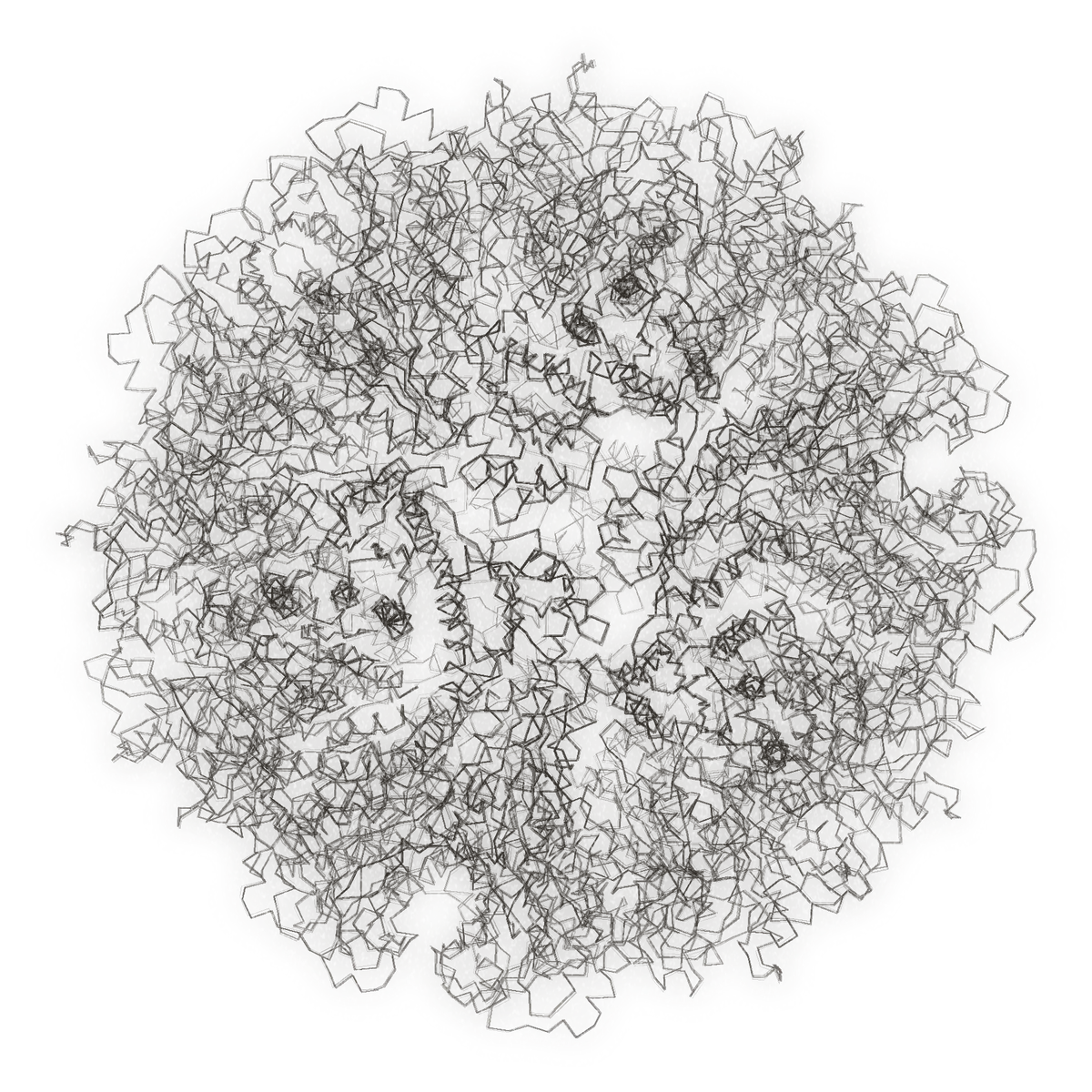
Company information
01 · Prove it.
Every mechanic and every feature is exercised by real input before it's called done.
02 · Make it feel right.
Responsiveness is a feature. A tool or a game should answer in the same frame you ask.
03 · Say what's true.
No invented awards, no fake screenshots. In development means in development.
- Registered name
- mcalbyrne Limited
- Company number
- 16879406
- Registered in
- England & Wales
- Incorporated
- 28 November 2025
- Trading names
- Overtwo